What is ice hockey?

With the Olympics approaching, I got to write a primer on “What Is Hockey?” for the International Ice Hockey Federation.

Hockey – a game of skill, speed, and heart
Games in which players use a club or stick to hit a ball into a goal date all the way back to antiquity. Ancient Greeks and Romans played similar games in Europe, while the Aztecs had their version in the Americas.

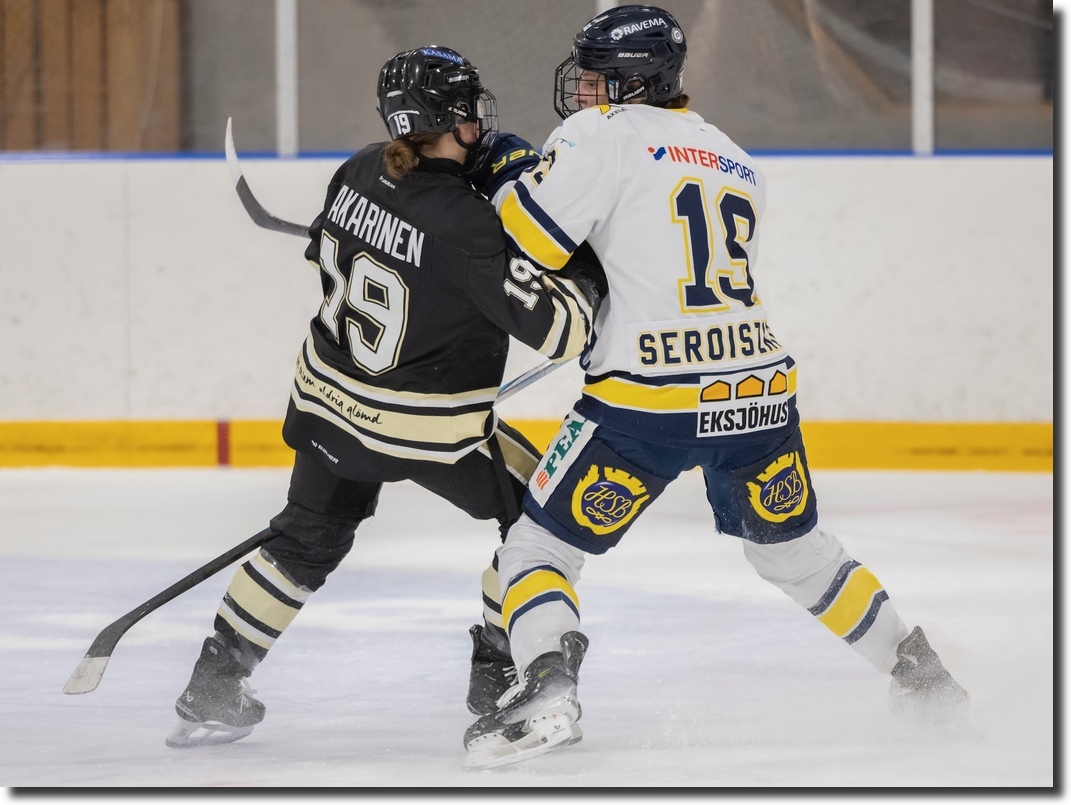
The clue to the special nature of ice hockey is in the name. This version of the game is played on a frozen surface, slippery ice, with players wearing sharp blades attached to their boots, as they try to handle a flat puck with a long stick while skating at high speed and avoiding – or delivering – contact with opponents.

Continue reading

Outdoor hockey rules

Our roving reporter, doing the rounds at the InterContinental and Hesperia hotels, warns the general public of false Gretzkys and Sittlers.
If you happen to see a 160-centimeter-tall fellow who weighs 90 kg wearing a sweater that says GRETZKY on the back, check his face. Or a skinny, redheaded guy with acne in a sweater that says SITTLER. Most likely, he’s either a conman or a superfan of said player.
In Canada and the US, you can buy hockey stars’ sweaters at supermarkets, and not only have some people done just that, they also wear them in public.
Imagine all the disappointments taking place in discos. A young lady at a sensitive age may believe she’s just hit it off with a hockey star who turns out to be a Canadian engineer. 
For example.
— Helsingin Sanomat, April 27, 1982

When the big outdoor rink opened just a ten-minute walk from our apartment building, I was an enthusiastic second-year hockey player in fourth grade. That was my second year in organized hockey, playing on a real team with real sweaters, that is.

I had been into hockey a lot longer than that, because Dad played in the lower divisions in Finland. And ever since I had been to a Helsinki IFK game at the Helsinki Arena and witnessed hockey goalies in real life, Dad had made me a beautiful cardboard mask, which he spray-painted black. I can still smell the fresh paint when I think back to that gorgeous piece of hockey equipment.

At our first game, the coaches handed out the green sweaters, and there was something magical about it. In my mind, it transformed me from just a guy into a player, so our coach might as well have been handing out Superman’s capes to us.

But he didn’t. He handed out a moss-green sweater with yellow letters across the chest, and on my sweater, a letter A. I had no idea what it meant, so I asked my buddy – the same boy who had told me about the opportunity to join a hockey team – about it.

“It means that you’re the assistant captain. I’ve got the C, so that means I’m the captain,” he said matter-of-factly.

“Oh, nice,” I said.

The coach heard it and promptly downgraded our superhero statuses to “basic level.”

For the past few years – maybe even ten – Daughter and I have hit the big outdoor ice on Christmas Eve. Sometimes Wife and Son join us, but since hockey isn’t their thing, most often it’s just the two of us.

And 200 others.

Unlike in 1980s Finland, many – if not most – of them are wearing the sweaters of their favourite teams and players. Many of them from the National Hockey League, but there are always some from the Swedish league, and then there are those who go for the vintage style.

They go to the basement and dig up their old hockey sweater: the one that doesn’t quite fit them anymore, even though they no longer have to squeeze any equipment under it; that old sweater that makes middle-aged dads smile out of nostalgia because the team no longer exists, or if it does, it now toils far below the top division.

The one that tells others that they are not new to the game of hockey. No, sir, they’ve played a game or two in their time.

At the time of its construction, our rink was the biggest outdoor arena in Europe, with a full-size speed-skating track going around the full-size bandy rink. Not that I knew it then, nor did I care. All I needed was a corner of that huge ice, some snow or hats for goalposts, and a few guys to play with.

I’d come home from school, do my homework – that was the rule – and if there was time before Mom and Dad came home from work, I’d throw my skates and gloves in a bag, grab a stick, and walk up the hill to the rink to look for a game.

On my way, I passed the soccer pitch where I had been skating as an even smaller kid, before the artificial ice. Between the street, the soccer pitch, and the track, a small path led toward the new rink, and once I got through there, I could already see the bright lights and even hear one of the most beautiful sounds I know.

A skate cutting through ice and the puck hitting the blade of a stick.

I’d rush through the doors, put my skates on, and run out to the ice. Sometimes I’d find a classmate out there, and with any luck, they’d already be playing a game, and I’d have my in.

If not, I’d have to hang around for a while and do some scouting—evaluate the level of play—then maybe fetch a few loose pucks to show off my skating, look for the right moment, and then say the magic words: “Can I join?”

According to outdoor hockey rules, the answer is yes, no matter how young or small you may be. There’s always a place for you. And once the game continues, no one cares about your age or skills or size. You just throw yourself into the game and let it carry you.

Now, it’s not like I didn’t pay any attention to the other players. I did. Especially a few years later, when I graduated to the hockey rink outside the big rink. Faster pace, tougher play, more sweater guys.

I loved to play against the sweater guys. Since there were no sweaters for sale in stores, anyone with one was certainly a player – or, more often, a wannabe player – and nothing made them more furious than a pint-sized kid outskating them, or deking them out of their skates.

That was a big deal. After all, they did wear hockey sweaters. Nothing could top that, except maybe getting a tap on the shoulder from the sweater guy on my team.

When Daughter and I go for our Christmas skate, we do wear sweaters. Call it a generational gap, but she wants to do it, so I play along.

I’ve worn Team Finland sweaters, a Valeri Kharlamov national-team sweater, and an Edmonton Oilers sweater a friend of mine bought when he was in Canada with the under-20 national team. (He was a real player.)

This year, Daughter went for a Team Canada sweater I had got her from a hockey conference earlier that year, but I decided to surprise her. I dug up my sweater from my second team, from the time when I walked up the hill to the huge ice rink looking for a game. The one that Mom had made smaller for me, but without losing the advertisement on the back. That was important, because it made the sweater feel real.

The sleeves were a little short, and the fit was a little tight, but not too bad, I thought.

I walked downstairs to show it to Wife and Daughter.

They laughed.

I went back up and changed.

I had become a sweater guy.

The comeback kid

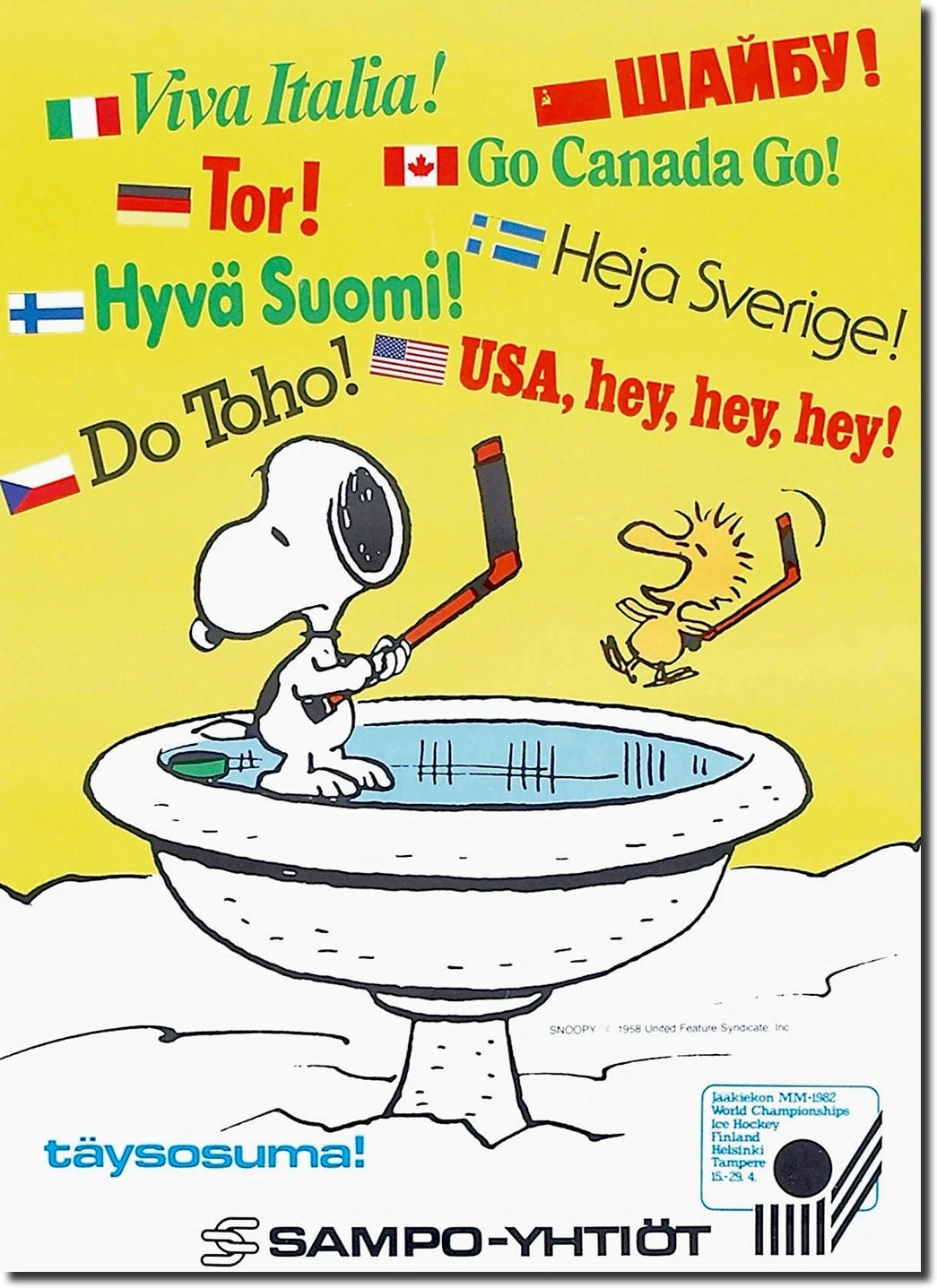
For years in my teens, I had a 1982 hockey World Championship poster on my wall. In the image, Snoopy is playing hockey with Woodstock, under the most common cheers for each of the eight teams in the tournament. There was “Go Canada, go!” ,”Heja Sverige” for Sweden, “USA, hey, hey, hey!” … and “Do toho!” for Czechoslovakia

That was new.

Since then,  I do tohoed the Czechoslovak players until I went to the World Championships in Ostrava in 2004, and realized that the loudest hockey crowd I have ever heard was chanting something completely  different, and nothing like do toho. I asked around, and was told they were saying what sounded like escheyeden to me, and means, “One more [goal]!”

Continue reading

Me and my barn

I can see magic in your eyes
I hear the magic in your sighs
Just when I think I’m gonna get away
I hear those words that you always say
– Steve Miller Band, “Abracadabra”

The first time I walked into the rink, it didn’t even have all the walls in place. The town had been waiting for the indoor rink for fifteen years, ever since Finland had got their first one in 1965, and a friend of mine was so excited about the rink finally being built that he wandered around the construction site to monito its progress. And one time, he and his father took me and my Dad with them.

“That’s where the rink will be,” he told me. “That’s where the dressing room will be. That’s where the cafeteria will be. This will be the sauna.”

He was right, even though, forty years later, I’ve never been back to the sauna.

The rink, including the cafeteria, was like a clubhouse to me in my teenage years. Outside school and my room (with my tapes and ZX Spectrum), that’s where I spent most of my time.

I knew every inch of the arena. And by every inch, I mean every inch. (Well, except for the sauna, of course).

Continue reading

IIHF.com: What you see is what you call

A referee can only call what he or she sees. But anyone who’s ever seen a hockey game knows that sometimes the on-ice officials miss calls, even though everyone else in the arena seems to have seen what happened.

As part of the continual development of officials, the IIHF has conducted studies on the referees’ vision. What do they actually see, and how do they make observations on the ice when things happen fast?

“We knew how fast officials can skate or run, or how much they could squat at the gym, so we wanted to go a little deeper and see if we had missed some part of the equation,” said Joel Hansson, Officiating Development Manager at the IIHF.

Continue reading

NHL.com: Finland, Sweden, hockey rivalry, and me

Ken Dryden, the Hall of Famer, Canadiens legend, and author, wrote in The Game that “the golden age of anything is the age of everyone’s childhood.”

I was comfortably out of my teens before Finland ever was a contender in international tournaments. In my childhood, getting relegated from the top division was a more likely outcome than a medal. To win the whole thing? Not in the cards.

In other words, it wasn’t easy for me to find homegrown heroes in what was my golden age of Finnish hockey. Don’t get me wrong; I don’t think you’ll ever find a better passer than Matti Hagman or a more creative winger than Hannu Kapanen. But to me they were Helsinki IFK stars first and Team Finland stars second, even if Kapanen’s disallowed goal would’ve clinched Finland’s first Olympic medal in 1976.

Continue reading

He was there

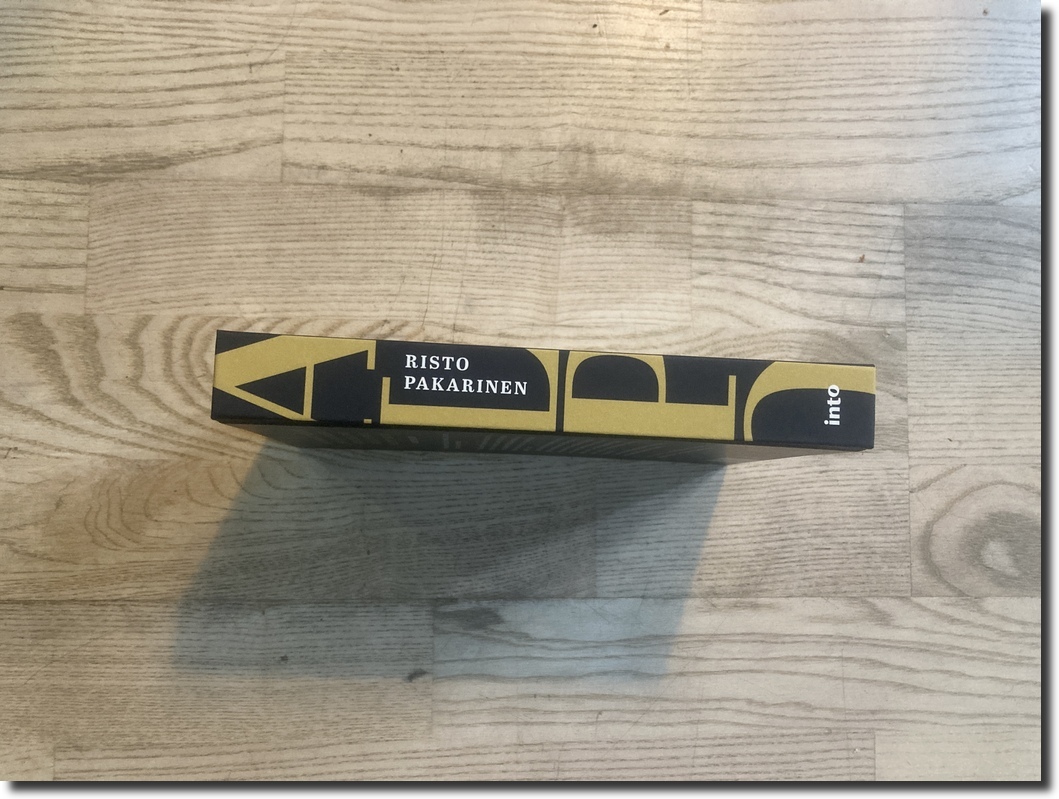
I wasn’t surprised when Alpo Suhonen called me one fall morning two years ago, He often called me to talk about his new ideas – and there were a lot of them.

I was stunned, though, when he asked me if I’d be interested in writing his biography. After all, I had been the one who’d been urging him to write one for years, ever since I first heard his fantastic, and fantastical, stories while working on another book with him almost ten years ago. We were supposed to be working on his philosophy of coaching, but more than once or twice, I realized I was listening to Alpo tell me about his adventures, the places he’d been to, and the people he’d met. (The list is long and you’d know all the names, but let me just say “David Bowie”).

Continue reading

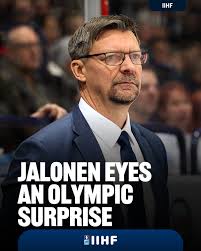
IIHF: Jalonen eyes an Olympic surprise

When a coach has won three IIHF Ice Hockey World Championship titles (2011, 2019, 2022), an Olympic gold medal (2022), and a World Juniors (2016), and led his homeland to the top of the IIHF World Ranking, you wouldn’t expect him to sign with a 20th-ranked national team competing in Division I Group A.

But that’s exactly what Finnish legend Jukka Jalonen did last summer when he signed a two-year contract with Italy, the host nation for the 2026 Winter Olympics.

Continue reading

IIHF: Not the usual route for Finns’ parade

The Finnish national team is no 1960s and ‘70s Montreal Canadiens, yet, but with three gold medals in four straight finals – three Worlds and one Olympic final – the citizens of Finland know well how to celebrate a hockey championship.

Maybe all too well.

The cities of Helsinki and Tampere build plywood walls around their landmark fountains and statues to protect them from the celebratory gestures, such as climbing on top of them.

That didn’t help as the walls came down and the fans went up.

Continue reading

Even Hockey Can’t Offer Escape

It’s difficult to focus on hockey when missiles are flying in Europe, not unimaginably far from where I’m sitting and typing this. And yet, all I want to do is think of hockey, hoping that the game will, once again, offer me refuge from the grim realities outside the rink.

Then again, all through my lifetime, hockey has been at the center of political attention, a venue for proxy fights and battles, from the 1969 World Championship, relocated from Czechoslovakia to Sweden due to the Soviet invasion of the original host country – and then the Czechs and Slovaks beating the the Soviets twice in the tournament – to the 1972 Summit Series to the Canada Cups to the 1980 Olympics and the Miracle on Ice all the way to the IIHF relocating the 2021 Worlds from Belarus.

There’s no escape.

Continue reading