
With the Olympics approaching, I got to write a primer on “What Is Hockey?” for the International Ice Hockey Federation.
Hockey – a game of skill, speed, and heart
Games in which players use a club or stick to hit a ball into a goal date all the way back to antiquity. Ancient Greeks and Romans played similar games in Europe, while the Aztecs had their version in the Americas.
The clue to the special nature of ice hockey is in the name. This version of the game is played on a frozen surface, slippery ice, with players wearing sharp blades attached to their boots, as they try to handle a flat puck with a long stick while skating at high speed and avoiding – or delivering – contact with opponents.
The rink is 60 meters long and between 26 and 30 meters wide, and the playing area is divided into two halves, marked by a red line that cuts across the center of the rink, and then again into two zones, marked by blue lines.
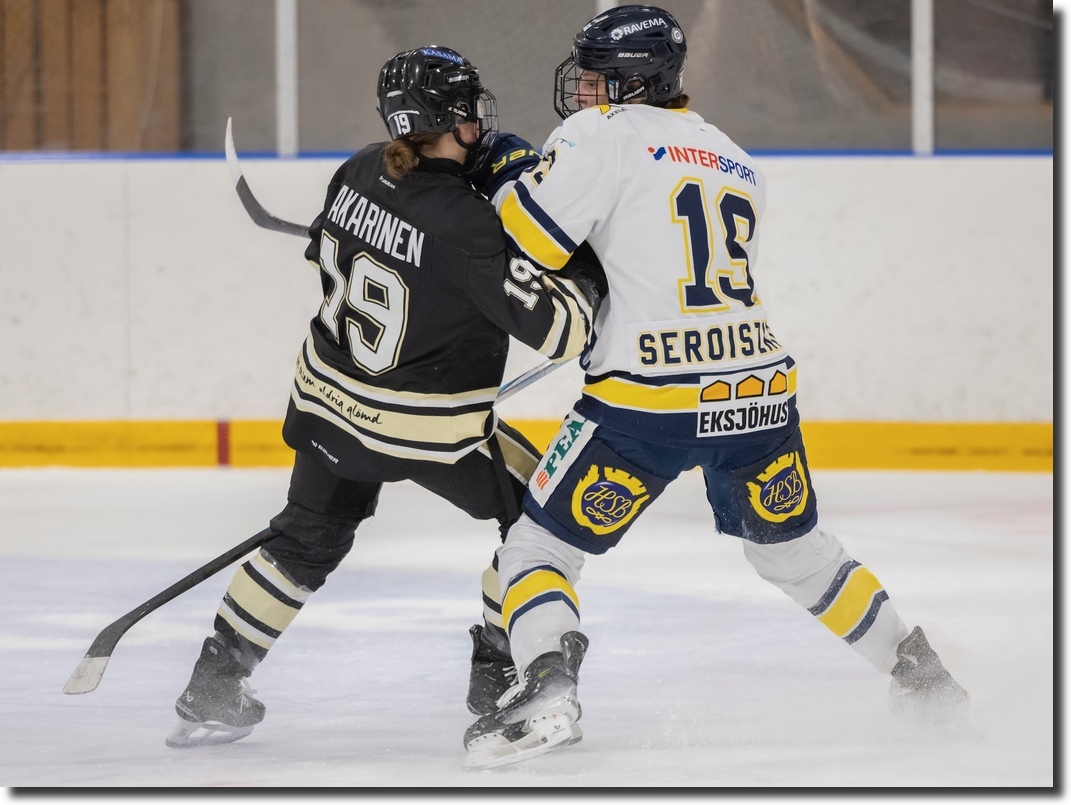
Since the rink is surrounded by boards, and since bodychecking another player into the boards is allowed – even encouraged – it adds a physical element to the game that already demands superior athleticism in skating and stickhandling.
Even the ground rules have changed many times since the first organized indoor game at the Victoria Skating Rink in Montreal on March 3, 1875, starting with the number of players, which early on was nine.
Today, hockey is played with five skaters and a goalie on each side. However, a team can have 22 players in the lineup (and in the Olympics, 25 players on the roster), and they can change either during a stoppage of play or “on the fly,” when one player simply skates to the bench and a teammate jumps in.
Each team has a goaltender to keep the puck out. The round puck, which is 7.62 centimeters (3 inches) in diameter and 2.54 cm (one inch) thick, is made of vulcanized rubber. At best, modern players can fire it at speeds well over 150 km/h.
That’s why the goaltenders are well protected by big knee pads, a chest and arm protector, pants, and a mask that is painted in the team colors. In their hands, they wear a catching glove and a blocker, with which they hold a special goalie stick.
The five skaters are generally divided into three forwards and two defenders and they, too, wear protection from head to toe.
For men, a transparent plastic visor is mandatory, while women wear cages to protect their faces. Underneath their jerseys, there are shoulder pads that also protect the chest, as well as elbow pads. The short pants are also padded to protect the players, and these days the equipment is so good that players often throw themselves in front of the puck to block shots.
Thanks to the equipment, fast pace of the game, and the bodychecking, players are often considered something of modern-day gladiators. And to make sure everything goes according to the rules, there are four officials on the ice: two referees and two linesmen.
The linesmen’s task is to follow the game and primarily call offsides and icings. An offside happens when an attacking player crosses the blue line closest to the opposing team’s net before the puck. Icing happens when a team shoots the puck from behind the red line all the way across the extended goal line.
The linesmen blow their whistle, the clock stops, and there will be a faceoff. On an offside, the faceoffs take place in the designated faceoff dots in the neutral zone, and in the case of an icing, at the faceoff dot in the defensive zone of the team that iced the puck.
The linesmen will also stop play when there are too many players on the ice and assist the two referees, who are in charge of assigning penalties. The most common ones have to do with infractions involving the stick; after all, it can be tempting to use the stick to stop an opponent – maybe to trip them or slow them down by hooking them.
The International Ice Hockey Federation Rule Book currently has twenty-two rules governing physical play, and another fifteen that have to do with sportsmanlike conduct, the flow of the game, and regulation equipment.
The game begins when a linesman drops the puck between two players in the faceoff dot in the center of the ice. After each 20 minutes of play – “a period”– there’s an 18-minute intermission during which the teams go to the dressing room to regroup, and the ice is resurfaced.
The team with the most goals after 60 minutes of play is the winner.
If a game is tied at the end of regulation time, there will be a short, three-minute break before a five-minute overtime period, played with three skaters on each side. The team that scores first wins. If neither team manages to score a goal, there will be a shootout in which players from each team take turns trying to beat the opposing goalie, one-on-one.
Ice hockey has been part of the Olympics since the 1920 Summer Games in Antwerp, and it was included in the first Winter Olympics in Chamonix in 1924. The women’s tournament was added to the program in Nagano in 1998.
The men’s all-time leading Olympic scorer is Teemu Selanne, who represented Finland in six Olympics between 1994 and 2014 and scored 24 goals and added 19 assists for 43 points in 37 games. Another Finn, Raimo Helminen, has the record for most games played in the Olympics, 39, also in six tournaments.
On the women’s side, the leading scorer is Canada’s Hayley Wickenheiser, who scored 18 goals and added 33 assists for 51 points in 26 games in five Olympics between 1998 and 2014. Switzerland’s Nicole Bullo has played the most Olympic games, 29, between 2006 and 2022.