
When I was a teenager, there was a series of coffee TV commercials in Finland, featuring blacksmiths, glass blowers, restorers and other artists and craftsmen talking about their craft.
Each commercial had the same, slow style, and the same darkish look, and they all ended in the same way. The person was doing whatever he was the master of — sanding a piece of wood that turned into a rocking chair — and he’d have a cup of coffee. And of course, the message was that the coffee was made with similar love and care as the master’s work.
The music to the commercials was also crafted with love, by Finnish Lasse Mårtensson, who also appeared in one of the early films in the series and whose previous work, the theme song from a popular TV show, had been the original tune in the commercials.
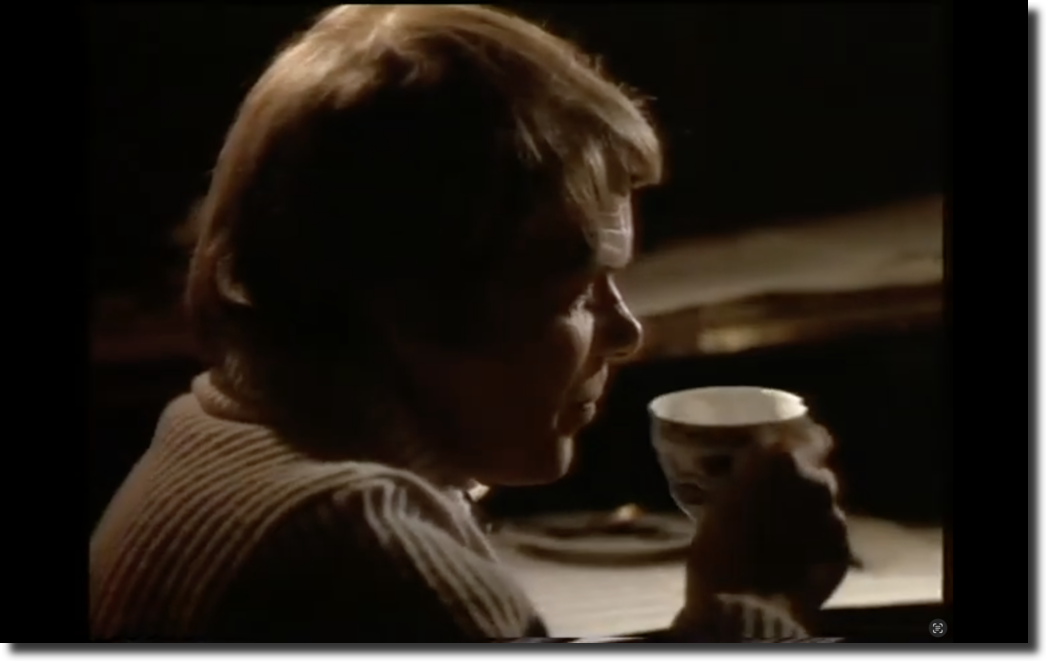
The commercials both oozed with love of the handicraft and took advantage of the romanticism the viewers felt for people who still carefully honed their craft, however long it took, whatever sacrifices it took, to produce the closest thing to perfection they knew.
The 1980s concept was so good, it survived well into the 21st century.
And why not? It’s easy to see why the concept worked. The masters’ passion for their work was contagious. Who wouldn’t want to pour his or her heart and soul into something like that, working by themselves until the end result was pure perfection?
That’s the romantic image of an author, as well. I’ve read way too many interviews with authors who (proudly) talk about the number of drafts they go through before their masterpiece is out in the bookstores.
It’s never one. (Nor is it two.)
It’s the time and the blood, sweat, and tears, and the love and passion they pour into the work that makes it worth something, to themselves and to others, and the more times you open up your veins, the more valuable it is.
Must be.
I think I always wanted to be an author — or a writer — but it never felt like something anyone did. No one I knew was an author. Maybe a copywriter in an ad agency.
But I loved to write, so I wrote. I also liked to play hockey, so I played hockey.
And sometimes I wrote about hockey.
However, since being an author wasn’t a real job, I got a good education in a good business school and went looking for one. I even got one of those, and then another one, and that one took me back to writing.
I was happy.
These days, anyone can be a writer. Let me rephrase that: Anyone has always been able to become a writer.
Let me rephrase that, too, because there’s a difference between anyone being a writer and becoming a writer.
Back in the day, you had to put in the time — unless you were just a natural-born author — and work at your craft, and drink coffee. You also had to have something to say. (Note: I am not saying that I always have a point, simply using a passive “you.” I also know that even further back in the day, research, for example, was much harder than it is today.)
With AI, everyone can prompt themselves to authorship. You don’t have to become an author.
I’m witnessing the end of my profession. People like me may become curiosities.
Maybe I’ll get to be in a coffee commercial.